Huma Font: Elevate Your Brand Identity
As a small business owner, you know that every visual touchpoint matters. From the first glance at your Instagram profile to the moment a customer unboxes their order, consistency builds trust. This is where your choice of typography becomes more than just an aesthetic decision; it becomes a strategic business asset. Enter Huma, a premium decorative font that does more than just display text—it tells a story of heritage, luck, and artisanal quality.
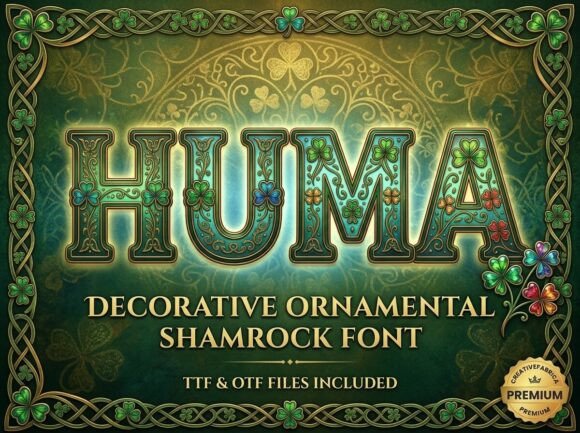
If you are looking to infuse your brand with a sense of history and warmth, Huma offers a unique solution. Inspired by the intricate beauty of Celtic artistry, this typeface features lush teal-to-gold gradients and hand-painted shamrock motifs. It is not just a font; it is a design element that can instantly elevate your brand identity, making your business look established, professional, and deeply connected to its roots.
Why Visual Consistency Builds Customer Trust
In the crowded marketplace of online sellers and boutique shops, standing out requires more than just a great product. It requires a cohesive look. When your logo, packaging, and social media graphics all speak the same visual language, customers perceive your business as more reliable. A disjointed brand, where fonts change from post to post, can feel amateurish. By adopting a distinctive typeface like Huma, you create a recognizable signature that stays with your audience.
Huma serves as a powerful anchor for your brand identity. Its decorative nature means it commands attention, making it ideal for headlines and key branding moments. When used consistently, it signals to your customers that you pay attention to detail. Whether you run a handmade candle business, a specialty café, or a coaching service, this level of polish helps justify premium pricing and fosters loyalty.
Practical Applications for Your Business Materials
So, how do you actually use Huma in your day-to-day operations? The key is to treat it as a display font rather than a workhorse for long paragraphs. Here are several real-world scenarios where Huma can transform your marketing materials:
- Logo Design: For boutiques, bakeries, or heritage-focused brands, Huma can serve as the centerpiece of your logo. Its Celtic-inspired curves add a layer of sophistication that standard sans serif fonts simply cannot match.
- Packaging Design: Imagine a tea box or a jewelry pouch featuring the Huma typeface in gold foil. The intricate details of the font complement high-quality materials, turning simple packaging into a keepsake.
- Social Media Graphics: On platforms like Instagram and Pinterest, visuals stop the scroll. Using Huma for quote cards, sale announcements, or event headers adds a festive and elegant touch that aligns with seasonal campaigns, especially around St. Patrick’s Day or spring launches.
- Product Labels: For small batch items like jams, soaps, or candles, Huma works beautifully on circular or rectangular labels. It draws the eye to the product name, making it memorable on a crowded shelf.
- Website Banners: Use Huma for your homepage hero section or special promotion banners. It creates an immediate emotional connection, setting the tone before the user even reads your copy.
Balancing Beauty with Readability
While Huma is visually stunning, practical business use requires balancing aesthetics with function. Decorative fonts are not designed for body text. If you try to use Huma for long descriptions on your website or detailed instructions on a label, your customers may struggle to read it. This friction can lead to lost sales or confused clients.
The solution is smart font pairing. Combine Huma with a clean, highly readable sans serif font or a classic serif font for your supporting text. For example, if you are designing a café menu, use Huma for the section headers like "Artisan Coffees" or "Fresh Pastries," but switch to a simple sans serif for the item descriptions and prices. This hierarchy guides the customer’s eye, ensuring they notice the style while easily accessing the information they need.
Similarly, consider the size and medium. Huma shines in large formats, such as flyers, posters, and digital ads. However, when using it on small product labels or mobile screens, ensure the text is large enough to remain legible. Test your designs on actual devices and print proofs before committing to a full production run. What looks crisp on a desktop monitor might blur on a small smartphone screen or a textured paper label.
Creating a Cohesive Brand Story
Your brand is more than a logo; it is the sum of every interaction a customer has with your business. Huma helps weave a narrative of craftsmanship and tradition. If you are a startup founder launching a line of organic skincare, using Huma on your thank-you cards and insert sheets reinforces the natural, handcrafted ethos of your products. It suggests that care went into every step, from formulation to presentation.
For service providers, such as wedding planners or interior designers, Huma can add a touch of luxury to your proposals and invoices. It elevates standard documents into branded experiences, reminding clients of the premium service they are receiving. Even in digital downloads or templates, using Huma for titles can increase the perceived value of your creative assets.
Testing and Implementation Tips
Before rolling out Huma across your entire brand, take time to test it in context. Create mockups of your most common materials: a business card, an Instagram post, and a product label. Look at them side by side. Do they feel like they belong to the same family? Does the teal-to-gold gradient complement your existing color palette, or do you need to adjust your brand colors to harmonize with the font?
Start small. Introduce Huma in one area, such as your social media headers or a new product launch. Gather feedback from your audience. Do they comment on the new look? Does it feel aligned with your brand values? Once you are confident in its impact, expand its use to your website, packaging, and printed collateral.
Licensing and Professional Use
Finally, always prioritize legal compliance. As a business owner, you must ensure you have the appropriate commercial font licensing before using Huma on products, packaging, merchandise, or client work. Font licenses vary, and using a personal-use font for commercial purposes can lead to significant legal issues. Check the specific terms provided by the typeface creator to ensure you are covered for digital ads, physical goods, and web embedding.
Investing in a premium font like Huma is an investment in your brand’s future. It provides a versatile, high-quality design asset that helps you stand out in a saturated market. By using it strategically, pairing it wisely, and applying it consistently, you create a brand identity that is not only beautiful but also trustworthy and memorable. In the world of small business, those qualities are invaluable.